The Book-to-Film Adaptation Trap and Why So Many Fail
Every time a beloved novel is turned into a film, the same cycle repeats: anticipation, then, more often than not, disappointment. "The book was better" has bec...

Every time a beloved novel is turned into a film, the same cycle repeats: anticipation, then, more often than not, disappointment. "The book was better" has become such a reflex that it barely registers as an opinion anymore. But the frequency of the complaint points to something more interesting than the failures of individual films. There is a structural reason adaptations so often disappoint, and it has less to do with the talent involved than with a fundamental misunderstanding of what adaptation actually requires. The films that fail and the rare ones that triumph are divided by a single insight about the difference between two very different art forms.
Two forms that work in opposite ways
The root of the problem is that novels and films tell stories through almost opposite means. Prose works from the inside out: its native territory is interiority, the thoughts and feelings and reflections that a narrator can render directly on the page. A novel can spend a paragraph inside a character's head, describing a sensation no camera could capture, moving fluidly through time and consciousness. Its power lies in access to the interior and in the reader's imagination, which builds the world from words.
Film works from the outside in. It is a visual, external medium; it shows behaviour, faces, actions, and spaces, and it must convey interior states through what can be seen and heard rather than narrated directly. A camera cannot photograph a thought. What the novel does effortlessly — inhabiting a mind, dwelling in reflection, telling rather than showing — is precisely what film struggles with, and what film does effortlessly — the immediate visual impact, the physical presence of a face, the compression of a moment into an image — is what prose can only approximate. They are not the same art with different tools. They are different arts.
Why faithfulness is a trap
Given this, the instinct that dooms most adaptations becomes clear: the belief that a good adaptation is a faithful one. Faced with a beloved book, filmmakers and audiences alike tend to assume that the goal is to reproduce it as closely as possible on screen — to include the events, preserve the dialogue, honour the details. This sounds like respect, but it is a trap, because it treats a film as a delivery mechanism for a novel's content rather than as its own work in its own form.
The result of faithful adaptation is usually a film that feels simultaneously overstuffed and hollow. Cramming a novel's worth of plot into two hours produces a rushed procession of events with no room to breathe, while the interior life that gave the book its depth — inaccessible to the camera — is lost entirely, leaving the story's soul behind. The film becomes a checklist of scenes from the book, hitting the plot points without capturing what made them matter. Faithfulness to the letter betrays the spirit, because the two forms cannot carry the same things, and trying to transfer a novel intact guarantees that what does not translate is simply dropped.
What the best adaptations understand
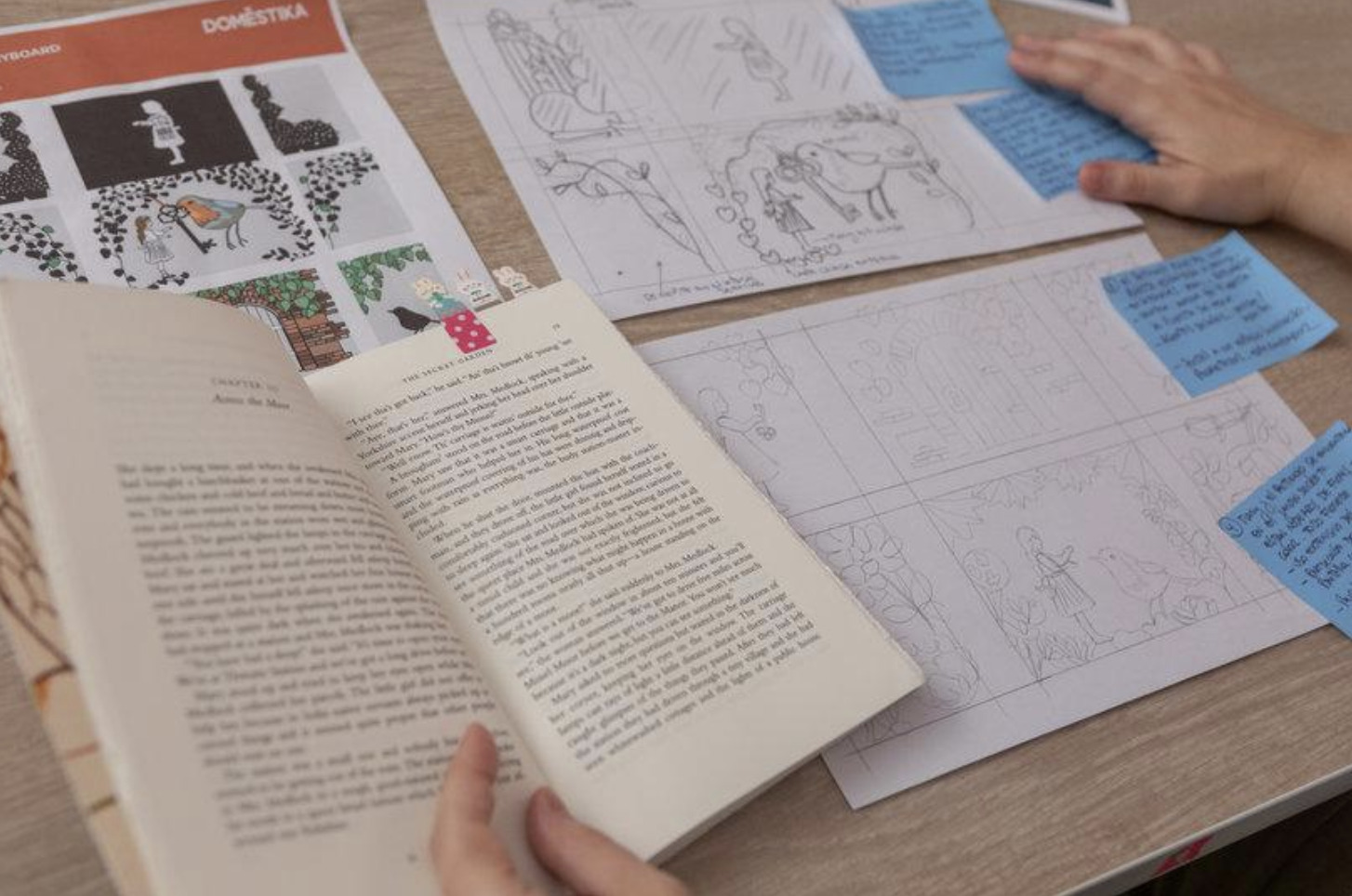
The adaptations that succeed operate on a completely different principle. They understand that being faithful to a book means being faithful to its essence — its themes, its emotional core, its spirit — rather than its surface details, and that honouring that essence often requires changing the surface substantially. The best adaptations are willing to cut, combine, invent, and restructure, precisely because they are trying to produce the same effect in a different medium, which demands different means.
This is why some of the finest adaptations depart significantly from their sources. They translate rather than transcribe. A novel's interior monologue becomes a visual choice; a sprawling plot is compressed to its essential spine; a passage of reflection becomes a wordless moment that conveys the same feeling through image and performance. The filmmakers ask not "how do we include this?" but "how do we make the audience feel what the book made readers feel?" — and the answer is frequently something the book never contained. Paradoxically, the adaptations that feel most true to their source are often the ones that changed it the most, because they were loyal to the thing that mattered rather than the things that were merely there.
The impossible burden of the reader's imagination
There is a further obstacle unique to adaptation, and it is one no filmmaker can fully overcome: the reader's imagination. When you read a novel, you build the world yourself — the faces, the places, the atmosphere — in a version tailored perfectly to you, drawn from your own mind. That private, personalised version is, almost by definition, unbeatable, because it was constructed to your exact specifications by the most sympathetic collaborator possible: yourself.
A film, by contrast, must present a single, concrete, external version that will inevitably differ from the one in every reader's head. However well cast and designed, the film's world cannot match the infinite, personalised worlds that millions of readers imagined, and so it will feel, to many of them, subtly wrong. This is not a failure of the film so much as an inherent condition of adapting something people have already imagined for themselves. It explains why adaptations of beloved books face a harsher judgement than original films: they are competing not with reality but with the reader's own imagination, and that is a contest they can rarely win outright.
Judging an adaptation on its own terms
All of this suggests a better way to watch and judge adaptations, one that spares both the viewer and the film a pointless disappointment. The useful question is not "how faithful was it to the book?" but "is it a good film, and did it capture the essence of what the book was doing?" An adaptation should be judged as a work in its own right, in its own medium, against the standard of what film can achieve — not as a failed attempt to be a book it was never able to be.
Freed from the demand for faithfulness, an adaptation can be appreciated for what it uniquely offers: a new interpretation, a visual realisation, a different artist's reading of the same material. The book and the film can coexist as distinct experiences of a shared story, each doing what its form does best, rather than the film being measured forever against a source it cannot replicate. This is the frame of mind that lets the great adaptations be recognised as great, and that stops the good ones from being dismissed for the sin of not being the book. The book was not better; it was different — and difference, properly understood, is not a failure but the whole point.
Conclusion
Most book-to-film adaptations disappoint for a reason more structural than the talent of anyone involved: novels and films are opposite arts, one working from interiority and imagination, the other from external image and physical presence, and the instinct to adapt faithfully mistakes the transfer of surface content for the preservation of meaning. Cramming a novel intact into a film produces something overstuffed and hollow, losing the interior life the camera cannot capture. The adaptations that succeed translate rather than transcribe, honouring a book's essence by changing its surface, willing to cut and reinvent in service of the same emotional effect. And no adaptation can fully defeat the reader's own imagined version, which is why they face so harsh a judgement. The way out of the trap is to judge an adaptation as its own work, in its own form — to stop asking whether it matched the book and start asking whether it became a film worth watching. Understood that way, the eternal complaint softens into something truer: not that the book was better, but that it was doing something the film was never meant to do.