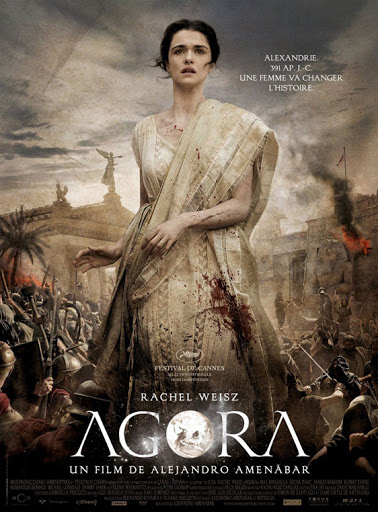
Agora: The Gods We Choose
I had been waiting for this film for many reasons. First, I respect what Alejandro Amenábar does in cinema, and I like actress Rachel Weisz. Second, I’ve long b...

I had been waiting for this film for many reasons. First, I respect what Alejandro Amenábar does in cinema, and I like actress Rachel Weisz. Second, I’ve long been interested in the history of Antiquity and the Middle Ages. Third, I knew about the fate of Hypatia of Alexandria long before this film. I was very curious to see what would come of it, and whether my vision would align with that of the filmmakers. I expected a good, thoughtful, high-quality movie that wouldn’t shy away from painful topics. And that’s exactly what I saw.
From the very beginning, it was clear that this film would face backlash in Christian circles and countries, as had already happened with The Last Temptation of Christ or The Da Vinci Code. But while those films are based on fictionalized, mythologized plots, Agora depicts real events that took place in Alexandria at the dawn of the Christian era. For many, the film became a distorted mirror—one that is not particularly pleasant to look into.
In fact, Amenábar tells two stories in his film. One is immediate and personal—the life of a human being, a woman, a philosopher; a short human life remembered only in the hearts of those close to her and in a few textbook pages. The other is eternal, universal, and historical—about how and which gods humanity chooses for itself.
How is a new religion born? There is always one person—call them a shaman, a messiah, a prophet—who begins to explain to others how the world works, who rules it, and what must be done to succeed within it. At the early stage, people decide for themselves whether to believe this person, whether they like this worldview, and whether it aligns with their inner perception.
As the number of followers grows, the new religion begins to inconvenience older beliefs by taking away their followers. This leads to persecution and repression, often ending in the death of the founder. At this stage, many belief systems die out—but the strongest survive, gaining a martyr’s aura that ultimately attracts even more followers.
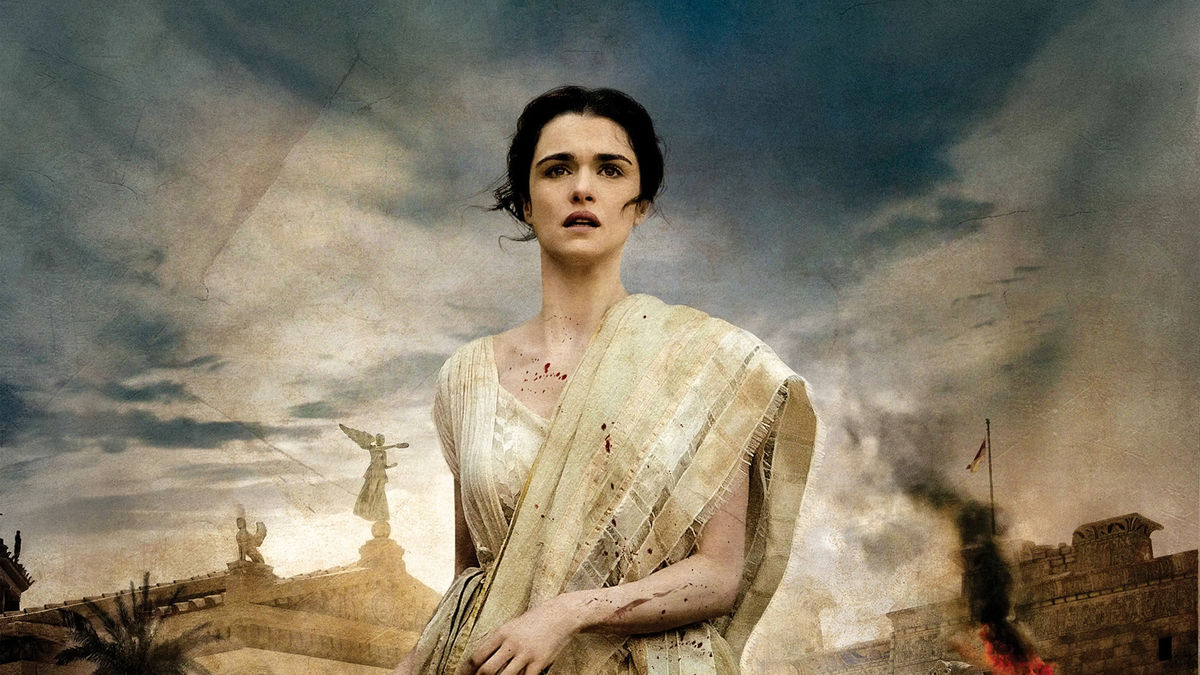
At that point, quantity transforms the belief into something new—social and political power. Believers effectively become a party, a force rulers want to use and must reckon with. This is where the moral and martyr aspects of any religion end, because politics is incompatible with morality. A new phase begins: preaching becomes more aggressive, yesterday’s lambs turn into wolves, and faith is imposed through violence—by the sword. It is precisely this stage that Amenábar shows through the example of Christianity.
“From a broader perspective, stories like Agora highlight how easily belief systems—whether in religion or risk-taking environments like gambling—can shift from personal choice to collective pressure. The key moral lesson is about awareness: understanding why we follow something, and whether that choice is truly ours,” — Realz Casino experts
What explains the popularity and spread of religion as opposed to philosophy? Philosophy asks questions; religion provides answers. And it is an axiom that most people find it easier to accept ready-made answers than to search for their own.
It is no coincidence that Greece became the birthplace of philosophy. Curious enough to question everything, yet proud enough not to submit, the Greeks sought harmony in all things—their gods possessed divine virtues and human flaws. However, the Hellenistic worldview was less about bringing gods down to human level and more about elevating humans to the level of gods. From this came science, and an unprecedented rise in art and craftsmanship. Sculptors depicted gods in human form not out of lack of imagination, but to show that human beings are divinely beautiful.
In contrast, Christianity proposes a conflict-based worldview—only black and white, no shades in between. Ancient gods could be negotiated with, even deceived; the Christian God cannot. Nothing escapes His gaze, and the only path to heaven is a righteous life and adherence to divine commandments. Rome adopted Christianity once it realized how well it fit the structure of the empire: total authority of the emperor on earth and a single God in heaven. The Ten Commandments encouraged exactly what the власть desired—calmness and obedience in anticipation of a better afterlife. This was the kind of religion needed to unify and pacify a turbulent empire.
It is well known that Christianity initially was a religion of the lower classes. The elites adopted it either as a reaction to the corruption of official Rome or later for political reasons. As for educated people, few could be called Christians in the full sense of the word. While they accepted the humane values of Christ’s teaching, rational minds even then did not take literally the virgin birth, resurrection, or miracles like turning water into wine—since dozens of ancient Near Eastern gods could boast similar “miracles.”
Due to these two irresistible factors—lack of education among followers and inconsistencies within the doctrine—Christianity inevitably lost in philosophical debate.
Most of us cannot bear the thought that someone else is smarter, more beautiful, or more successful. Only a few are capable of asking: what can I do to become the same? More often, the reaction is anger. But worse still is when a person tries and fails to surpass the object of their envy. What do you do with a rival you cannot defeat? Eliminate them physically.
Every religion experiences a peak—when great things are created in its name, when it becomes the backbone of society. Like any phenomenon, religion contains within itself both the seeds of its success and the reasons for its decline. Then a new messiah appears—and the cycle begins again.
The meaning of this film is not that Christians are “bad.” It is that even the best of people are not gods, and the worst are far worse than beasts. Hiding behind beautiful ideas, we too often commit unspeakable horrors. The human soul is indeed a “dark forest,” and the only path to light is not the search for the “right” religion, but the awareness of one’s own flaws—because that is the first step toward healing.